TL;DR
Scope the deliverable, not the scanner: name the Revit LOD tier, the CAD sheets, and the point cloud format your team already opens. Ask how accuracy is controlled under survey control rather than quoting a spec sheet, require insurance, subcontract, and NDA before mobilization, put client-ownership terms in writing, and hold the sub to a deliverable date, not just an off-site date.
How to Subcontract 3D Laser Scanning Work
Your firm won the project. Somewhere in the scope is a line that says "verify existing conditions," and the building is decades old with drawings that stopped being true two renovations ago. You need laser scanning — and scanning is not your trade.
The good news: subcontracting reality capture is a solved problem. Firms do it every week, and the ones that do it well all handle the same five things up front.
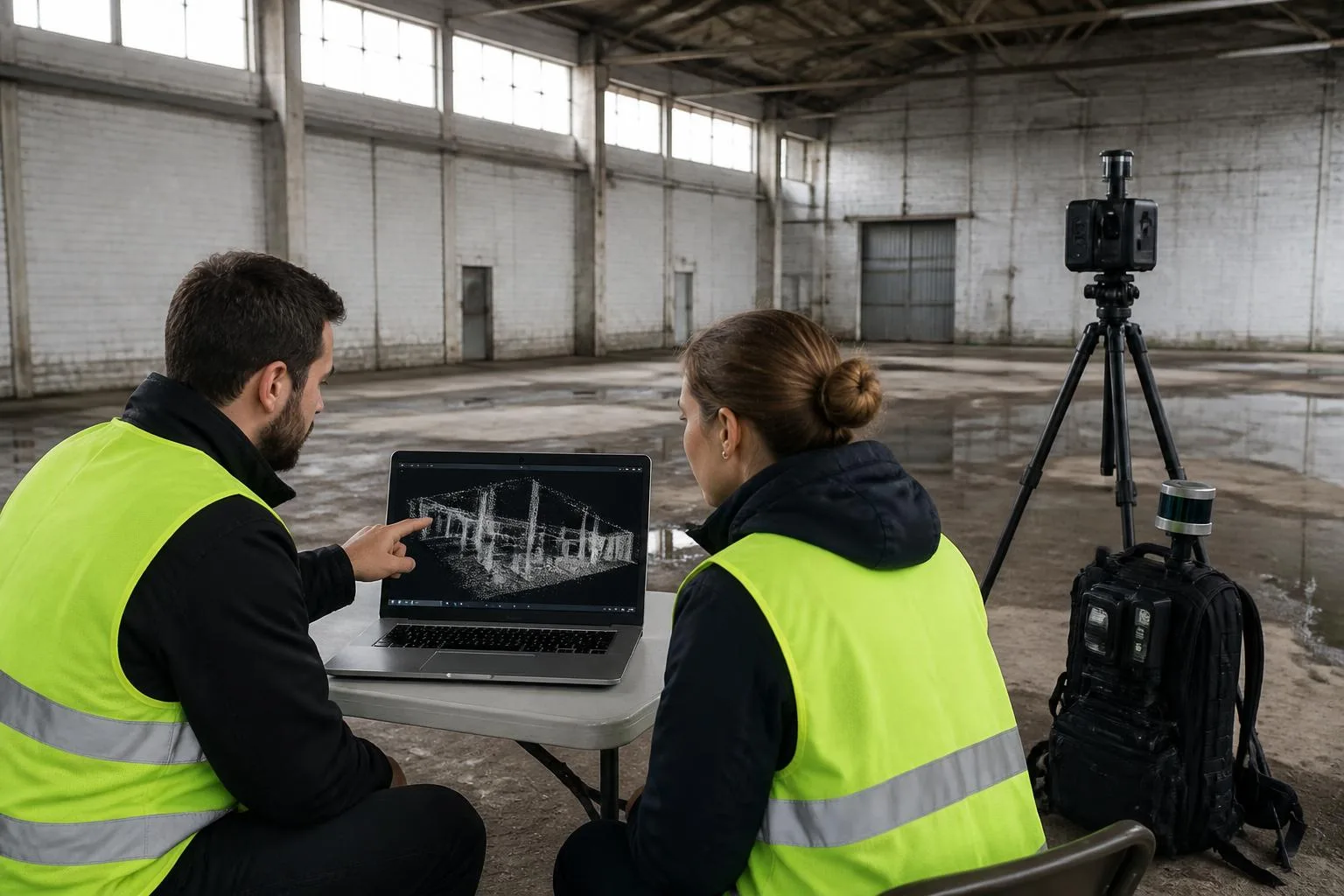
1. Write the deliverable, not the technology
The most common scoping mistake is specifying the scanner instead of the output. Your project doesn't need "a point cloud" — it needs something your team will open on a deadline. Write the deliverable in your software's terms:
- A Revit model — and say the level of development. LOD 200–350 covers most renovation and adaptive-reuse work; the difference between those tiers is hours of modeling time, so naming the tier is naming the budget.
- 2D CAD backgrounds — floor plans, RCPs, elevations, sections. Say which sheets and at what level of detail. Scan to CAD work is scoped by sheet, not by square foot alone.
- The point cloud itself — in a format your machines already read: E57, RCP for Autodesk workflows, LAS or PTS for others. If you don't know which, ask your BIM manager before the sub asks you. The format comparison covers the trade-offs.
A good scanning sub will help you write this scope from your drawings or a site walkthrough. A deliverable spec takes an hour to write and removes most of the argument later. If a sub can't turn your project requirements into a deliverables list, that's your first data point about working with them.
2. Ask how accuracy is controlled, not just what the spec sheet says
Every scanner brochure quotes millimeters. The question that separates providers is what happens between the scanner and the deliverable: registration method, use of survey control, and how the assembled dataset gets checked. Mobile mapping systems — the NavVis VLX3 is one — capture at walking pace and hold ±5mm under survey control, but the phrase that matters in that sentence is *under survey control*. Ask the sub how they will control your building specifically: how many control points, set how, checked against what.
If the answer is a spec sheet instead of a workflow, keep interviewing. Vetting point cloud accuracy before award is cheaper than discovering the problem in coordination.
3. Require the boring paperwork before the site visit
The subcontract package for scanning looks like any other trade's:
- Insurance — general liability plus inland marine (that's the coverage class for expensive equipment that travels). Certificates naming the project parties, on file before mobilization.
- A signed subcontract and mutual NDA — scan data is a complete record of a client's facility. Treat it with the same confidentiality discipline as financials.
- W-9 and COI before the first invoice — so accounting never becomes the reason a deliverable sits unreleased.
None of this is exotic. A scanning firm that partners regularly will have the package ready before you ask.
4. Decide who owns the client relationship — in writing
Subcontracting works when the roles are unambiguous: you hold the client contract, the scanning sub delivers to you, and the sub does not market to your client afterward. Put that last part in the agreement. Reputable providers will volunteer it — it's how they keep getting partner work.
5. Schedule scanning like a trade, not like a site visit
Scanning is fast — mobile systems cover large buildings in hours, not weeks — but the *project* is capture plus registration plus modeling. The field day is the short part. When you build the schedule, ask the sub for two dates: when they will be off site, and when the deliverable lands in your inbox. Hold them to the second one. How long laser scanning takes breaks the phases down if you need to defend the schedule internally.
When to bring the sub in
Earlier than feels natural. The best subcontract projects start before the proposal goes out — the scanning firm scopes from your drawings, you carry a real number instead of an allowance, and nobody discovers mid-project that "verify existing conditions" meant an entire hospital campus.
Related: the partner program explains how the arrangement works in practice, and as-built documentation covers what the finished record includes.